
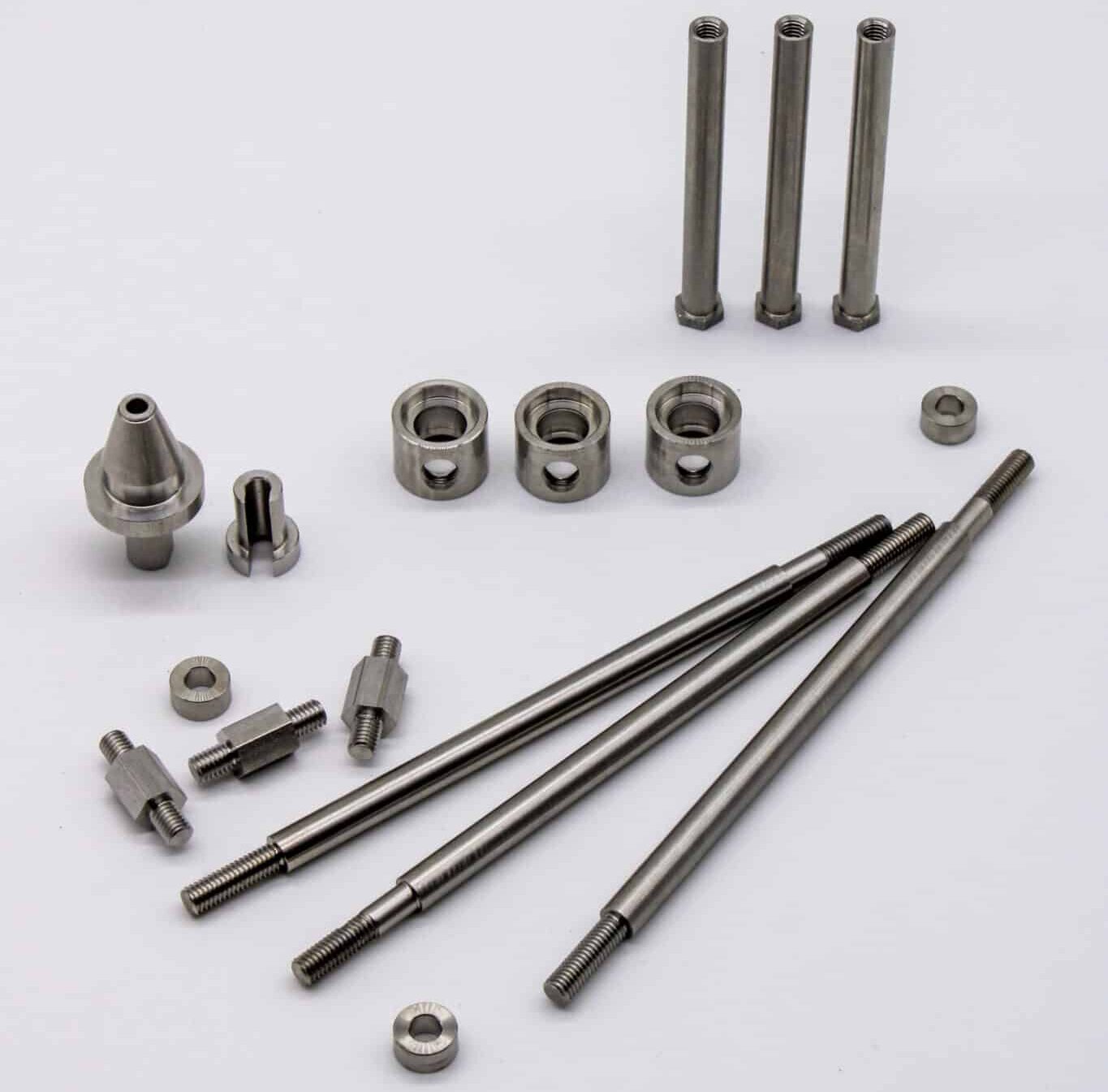
The pneumatic sector It is one of the most demanding in terms of dimensional precision, reliability and material choice. Fittings, plungers, valves and actuators operate under pressure, often in environments with fluids, humidity or chemical agents: a component out of tolerance or made from the wrong material can compromise the entire system.
The pneumatic sector is one of the areas we operate in at MI.SO.: fittings, cylinders, valves and actuators are part of our daily production.
The choice of material is critical in the pneumatic industry for several reasons. Materials are chosen based on their resistance to wear, temperature, chemicals, and pressure. The correct materials ensure components function effectively and reliably under the demanding conditions often found in pneumatic systems. They also contribute to the longevity of the equipment, reducing maintenance costs and downtime.
I componenti pneumatici funzionano in conditions that test any materialoperating pressures that can exceed 10 bar, high-frequency repeated mechanical cycles, contact with compressed air, lubricants, and – in some sectors – aggressive chemical agents.
The choice of material is therefore not just a matter of cost: it directly affects the Duration of the component, on the Estate of tolerances over time and on Regulatory compliance A standard brass fitting may be suitable for a general industrial plant, but not in an environment exposed to chemical vapours, where AISI 316 stainless steel or a technical plastic like PEEK is required instead.
The materials we use for pneumatic fittings
Stainless steel
Stainless steel is the material of choice for pneumatic components operating in corrosive or regulated environments.
- AISI 303easy to work with and with good mechanical resistance, it is the typical choice for fittings and screws in standard pneumatic systems. Its excellent machinability makes it ideal for complex geometries in long runs.
- AISI 304It offers excellent resistance to corrosion and chemicals. It is suitable for pneumatic fittings exposed to fluids and for components that require more frequent cleaning.
- AISI 316the most corrosion-resistant variant, suitable for damp, aggressive environments and for systems where maximum long-term reliability is required.
Brass
Brass is still one of the most used materials in pneumatics today, thanks to its combination of workability, strength, and low cost.
- CW510LUsed for pneumatic fittings and valves due to its good corrosion resistance and excellent CNC machinability. It complies with regulations for contact with drinking water and food fluids, making it versatile also in hybrid applications.
Engineering plastics
In applications where weight, friction, and chemical resistance are paramount, technical plastics offer performance that metals cannot guarantee.
- PEEKExcellent for high-performance seals in pneumatic systems; offers high thermal, chemical, and mechanical resistance even under demanding operating conditions.
- POM-CIdeal for seals and gaskets in pneumatic systems. Guarantees low friction and high wear resistance, extending the service life of moving components.
Aluminium
For structural components and parts subject to dynamic loads, aluminium offers the best strength-to-weight ratio.
- ERGAL 6061Suitable for light parts subjected to moderate loads.
- ERGAL 6082lightweight and resistant, used for components subjected to dynamic loads such as actuator bodies and supports.
- ERGAL 7075the high-performance alloy, used in structural components of compressors where mechanical strength is a priority.
Automatic steel
For precision pneumatic components where workability is paramount and production volumes are high.
- AVP (Fast Leaded Steel)guarantees short chips and excellent surface finishes, ideal for long-run pneumatic miniaturised parts.
- AVZ (Lead Free Fast Steel)the eco-friendly version, with the same workability characteristics but lead-free, for applications subject to stricter environmental regulations.
To have resistance to corrosion in air and in contact with fluids, these two materials require surface treatments.
Steel alloy
When mechanical and fatigue strength are the main requirement, alloy steels are the right choice.
- PR70mechanical durability, suitable for structural components in pneumatic systems.
- PR80 galvanisedMechanical strength for pneumatic screws and fittings subjected to cyclic stresses.
- 42CrMo4Suitable for precision metal small parts machining in the Ø 3–32 mm range and lengths up to 250 mm, with excellent fatigue resistance characteristics.
- 17NiCrMo6-4: perfectly workable for precision parts with diameters between 3 and 32 mm, suitable for high mechanical stress components.
To make them corrosion-resistant, all these materials require surface treatments.
The products we make for the pneumatic sector
Our production covers the entire range of precision components required by the sector:
- Pistons and shafts for pneumatic cylindersmanufactured to tight tolerances to ensure sealing and smooth running during work cycles
- Fittings for pneumatic pipelinesin brass, stainless steel or aluminium depending on the application and operating pressures
- Bushings and spacers for valves and regulatorswith precise geometries for the correct functioning of the regulating organs
- Nozzles and pressure regulatorsComponents where dimensional accuracy directly impacts fluid dynamic performance
- Precision components for linear actuatorsproducts with the repeatability and consistent quality required by automation builders
Tolerances and manufacturing specifications
At MI.SO., we work with diameters from 3 to 32 mm and lengths up to 250 mm, with dimensional tolerances suited to the requirements of the pneumatic sector. The operations that can be performed in a single cycle include turning, drilling, milling, tapping, and grooving, thanks to our 8 and 9-axis TSUGAMI multi-axis lathes.
Each batch is produced and inspected according to our ISO 9001:2015 certified quality system, with process documentation and full traceability.
What material to choose for your pneumatic component?
The answer depends on three main factors: the’Operating environment, the mechanical stresses and I Regulatory requirements of the application.
- Standard environments, high volumes Brass CW510L or AVP/AVZ
- Exposure to fluids and moisture AISI 303 or AISI 304
- Chemical or aggressive environments AISI 316 or PEEK
- Moving components with friction requirements → Polyoxymethylene
- Lightweight structures and dynamic loads ERGAL 6082 or 7075
- High mechanical and fatigue strengtha → 42CrMo4 or 17NiCrMo6-4
If you have any doubts about the most suitable choice for your project, our technical office is available for an analysis of the drawing and advice on materials before production.
Do you have a pneumatic component to produce?
Share the technical drawing with us.We will analyse the feasibility and propose the most efficient processing cycle.