Nuts, washers, bolts, pins and bushings: objects so small that they go unnoticed, yet present in almost every machine, system and industrial product. These are so-called metal turned part, a family of components that literally hold together much of what surrounds us.
What is metal turned part
Metal turned part is the set of small metal components that perform functions of fixing, connecting, supporting, or transmitting within larger assemblies. These are parts with a reduced unit value, but used in large quantities and in an enormous variety of shapes and sizes.
The term “turned part” derives precisely from the contained dimensions of these elements, not from their importance. A single nut that is out of tolerance or a screw with a defective thread can indeed compromise the functioning of an entire product.
What is the purpose of the metal turned part?
Although often invisible in the finished product, metal turned part performs several essential functions:
- Fixing and assembly: to unite two or more parts in a stable and, when necessary, removable way.
- Mechanical connection: transfer loads and forces between different components.
- Positioning and guidance: keep the elements of a mechanism aligned and in the correct position.
- Support and distance: create calibrated spaces or support parts subjected to stresses.
Without these elements, most of the machinery, electronic devices, and furnishings we use every day could not be assembled or function reliably.
The main types of metal turned part
The metal turned part section includes hundreds of different items. To get started, it is useful to group them into two great families: the fixing elements and precision mechanical components.
Fixing elements
They are the most well-known components, those that guarantee tightness and stability in any assembly.
The main ones are:
- Screws: threaded elements that are screwed directly into the material or into a nut.
- BoltsWhen combined with a nut, they form highly resistant, removable connections.
- Dadi: in hexagonal, blind, self-locking, with fins and in a cage.
- RondellesFlat, elastic (like Grower), serrated or safety belts distribute the load and prevent sagging.
- Rivets and buckles: for permanent unions or to lock other components in place.
Precision mechanical components
Alongside the fixing elements there is a wide range of parts, often made to order, that perform specific functions.
The most common ones are:
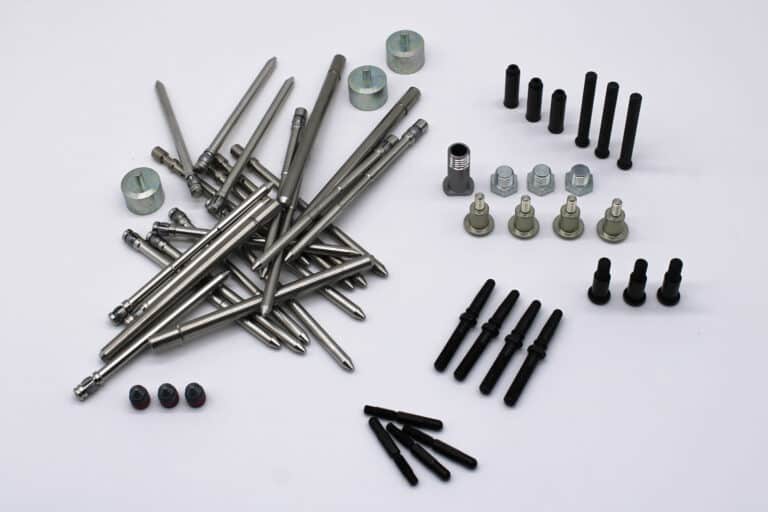
- Pins and spines: for the connection and positioning of movable or fixed parts.
- Bushings: cylindrical elements, often threaded, that serve as support or guide.
- Distal joints: maintain a precise distance between two surfaces.
- Hoses and fittings: for the connection of hydraulic or pneumatic circuits.
- Shafts and small turned components: precision mechanical parts according to customer specifications.
Materials for metal turned part
The choice of material It depends on the performance requirements: mechanical strength, corrosion resistance, conductivity, weight or aesthetic appearance.
The most used ones are:
- Carbon steel and alloy steel: economical and durable, suitable for screws and structural components.
- Stainless steel (AISI 303, 304, 316): resistant to corrosion, used where hygiene and durability are important.
- BrassEasy to work with and good conductor, used in plumbing, electrical engineering and wiring.
- Aluminium and its alloysLightweight and resistant to corrosion, ideal where weight is a constraint.
- Copper and bronze: for electrical applications or those requiring special anti-friction properties.
In addition to metals, the following materials are also used: Technological plastics like PA 6.6, PEEK and POM, chosen for lightness, electrical insulation and resistance to corrosion in specific contexts.
How metal turned part is produced
There is no single way to produce metal turned part: the technology changes based on the geometry of the piece, the material, the required tolerances, and the production volumes. More common machining processes There are four of them.
Cold-forming
Cold stamping, or cold plastic deformation, is the typical process for high-volume fasteners and bolts. A piece of metal wire is deformed at room temperature through successive stations, until it assumes the desired shape.
It is a high-speed process that reduces waste of material, because it does not remove chips and improves the mechanical characteristics of the part thanks to the hardening process. It is often complemented by the threading of the thread, which forms the thread for deformation rather than removal. For these reasons it is widely used in the automotive and electrical engineering sectors.
CNC turning
The turning is The most suitable processing for the turned part precision. The piece is obtained by removing chip from a bar, machined with tools driven by a numerical control system (CNC).
sliding head turning machines are particularly suitable for small, long and thin parts with very tight tolerances. They allow the creation of complex geometries, threaded connections and precision machining with high repeatability, ideal for components designed according to a specific drawing.
Cutting and processing of sheet metal
When the component is made from a sheet of metal, as is the case with many washers and plates, stamping, bending and folding are used. The sheet metal is cut and formed using molds in fast cycles suitable for large series production.
Surface and finishing treatments
After processing, many pieces receive a surface treatment to increase resistance to corrosion, improve appearance, or confer specific properties. The most common include zinc plating, nickel plating, browning, phosphating, and anodic oxidation for aluminum.
In which sectors is it used
Metal turned part is used in almost all industrial sectors: it is difficult to find a finished product that does not contain at least some metal elements.
The main areas of application are:
- Automotive: fixing and precision components subjected to stresses and vibrations.
- Electronics and data centers: connectors, spacers and small parts for equipment and servers.
- Food and medical industry: stainless steel or technical plastic parts, where hygiene and traceability are important.
- Hydraulics and pneumatics: Fittings, bushings and valve bodies.
- Furniture and designHandles, knobs and visible metallic details, where aesthetics matter as much as function.
In each of these sectors, the demands for tolerance, material and finish change profoundly, and with them the most suitable production process.
How to recognize quality metal turned part
Since these are small but decisive components, the quality It makes the difference between a reliable assembly and a failure.
Among the indicators to be evaluated:
- Tolerances respectedThe dimensions must be within the limits specified in the drawing, with good repeatability throughout the batch.
- Certified materialsThe origin and composition of the material should be documented.
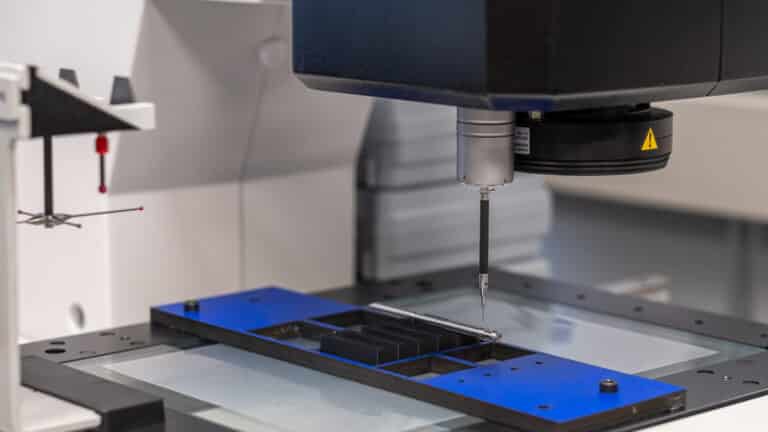
- Structured quality controlSystematic dimensional checks, even with optical instruments, reduce the risk of defects.
- TraceabilityBeing able to trace back to batch, material and work processes is fundamental in regulated sectors.
- Appropriate finishThe surface treatment must be consistent with the component’s intended use environment.
A well-designed and well-made turned part goes unnoticed: it simply does its job, for a long time and without surprises.
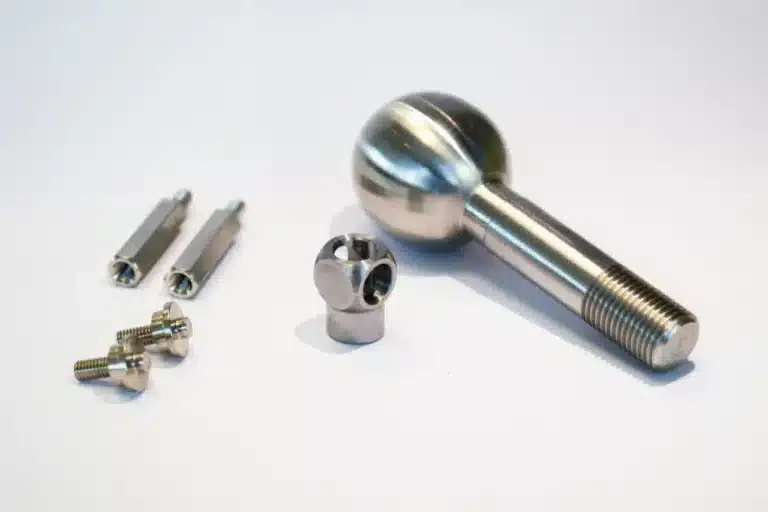
Behind every screw, nut or precision ball joint there is a process involving the selection of materials, meticulous machining and rigorous controls. This is exactly the field of precision turned part hardware, where MI.SO. manufactures small components according to design using sliding head CNC turning, certified materials and daily quality controls.
To understand how a component is created, from the technical design to the finished piece, you can delve deeper into the topic. MI.SO. method. and discover our approach to quality.
If you have a project or design to evaluate, contact us to discuss it with our team.